Schroedinger's Echoes
This article approaches Schrödinger’s thought experiment through the lens of Echophenomena. In neurology and psychology, Echophenomena describe the close coupling between perception and expression—when an observed action, sound, or emotional state reverberates into imitation, repetition, or mirroring. A signal enters; a response follows, sometimes with minimal filtering. The system echoes.
It doesn’t need to be terrifying to contemplate these echos, though. We can simply look to the natural world
Across domains, similar structures appear. In isotopes, probabilistic decay echoes into mechanical consequence. In humans, perception echoes into motor imitation, speech repetition, affective mirroring, or cognitive fixation. In social animals, observed behavior echoes into coordinated action or ritualized response. In each case, a trigger initiates propagation. A small input becomes a patterned output.
By positioning Schrödinger’s cat as an experiment in echo rather than merely in observation, the radioactive half-life becomes central. It is the formal source of indeterminacy that allows a microscopic fluctuation to reverberate through successive layers of organization. The box is not just a container; it is an amplifier. The isotope is not just a randomizer; it is a generator of echo.
First, the Cat
Half-life is how long it takes for half of a batch of radioactive atoms to decay. It is not a single big event; it is a gradual, statistical thinning. You start with many unstable atoms; after one half-life, about half have decayed, half have not. After another half-life, half of the remaining ones decay again. It never cleanly hits zero; there is always some chance that a given atom has not decayed yet.
Schrödinger chose this kind of process on purpose. He needed something whose decay time is bothmeasurable as probability and fundamentally indeterminate: you can only assign probabilities, not a definite schedule. So, you pick a time window (often, one half-life) in which there is a 50% chance the atom has decayed and 50% chance it has not.
Then he chains this microscopic uncertainty to a big, visible outcome: if the atom decays, it triggers a detector, which releases poison, which can kill the cat. If it does not decay, nothing happens and the cat stays alive. In this way, a fuzzy, probabilistic event at the atomic level gets turned into a stark “alive or dead” condition for the cat.
At a human scale, one way humans experience this as Echophenomena.
Echophenomena describe moments when perception (afferent) and expression (efferent/blended) become closely linked, that what someone experiences reflects back as movement, speech, or thought.
Dysfunction may arise from:
Frontal lobe lesions The frontal lobes—especially the prefrontal cortex—help regulate behavior. They contribute to decision-making, response selection, impulse control, and distinguishing between self-generated actions and externally triggered ones. When this region is structurally damaged or not functioning effectively, automatic responses may be less filtered before being expressed.
Basal ganglia dysfunction The basal ganglia are deep brain structures (including the caudate and putamen) that help regulate “go” and “stop” signals for movement and speech. They assist in selecting which action proceeds and suppressing competing actions. When their gating role is altered, responses that are normally contained may be released more readily.
Dopaminergic dysregulation Dopamine is a neurotransmitter produced in midbrain regions such as the substantia nigra and ventral tegmental area. It helps modulate how strongly signals are activated, how important they feel, and how easily they translate into action. When dopamine signaling is disrupted—whether elevated, reduced, or irregular—the threshold for initiating or inhibiting actions can shift.
Disruption of cortico-striatal-thalamo-cortical loops These are feedback circuits connecting the frontal cortex, basal ganglia (striatum), thalamus, and back to the cortex. They coordinate action selection, suppression, and behavioral regulation. When communication within these loops is altered, the balance between initiating and inhibiting responses can become less stable, increasing the likelihood of automatic or repetitive output.
In medical settings they are most often interpreted as:
· Indicators of catatonia
· Features of schizophrenia spectrum disorders
· Features of autism spectrum conditions
· Manifestations of frontal lobe dysfunction
· Tic-related phenomena
· Neurodegenerative or structural brain conditions
Major Forms of Echophenomena in Animals
For the purpose of this article, I’m grouping these phenomena as though they are categories.
· Motor (movement imitation)
· Verbal (speech repetition)
· Self-verbal (palilalia)
· Thematic (death-focused repetition: Echothanatologia)
· Behavioral imitation of death themes (Echothanatophraxia)
· Cognitive perseveration
· Affective mirroring
· Perceptual persistence
1 Echopraxia (Motor Echo Phenomenon)
Echopraxia is the automatic imitation of another person’s physical movements. A seen action is translated almost immediately into the observer’s own motor output, often without conscious intention. It reflects a coupling between visual perception of movement and the motor execution system, mediated by mirror neuron circuitry and motor planning networks, with reduced inhibitory modulation from frontal control systems.

Examples often observed in social animals include the rapid copying of movements, sometimes termed "monkey see, monkey do" in primates.
Echopraxia shows up in Schrödinger’s ideas about
Non‑separability of individual agents
For Schrödinger, what we call “many minds” are not truly separate entities but localizations of a single mind or consciousness. He argues that consciousness is never actually experienced “in the plural,” and that the apparent plurality of selves is a deceptive appearance rather than an ultimate fact. This leads to his “one mind” or “doctrine of identity”: the deepest level of the subject is identical across beings, so agents are not ontologically separate, only phenomenally differentiated.
Illusion of isolated individuality
Schrödinger leans explicitly on Advaita Vedānta and the Upanishads to say that the plurality of individual selves is māyā—an illusion superimposed on an underlying unity. He describes the conviction that “I” am an absolutely separate subject as a mistaken reading of experience, sustained by memory, embodiment, and ego structures. On his view, the “personal self” is just one personality-aspect of the single universal self, so the feeling of being a sealed-off individual is a useful but fundamentally misleading construction.
Behavioral expressions from a shared underlying field
In this framework, observable behavior—thoughts, choices, social action—are different surface manifestations of the same underlying field of consciousness. Each organism functions like a local mode or “channel” through which the one mind expresses itself, giving rise to diverse, even conflicting, behaviors while remaining rooted in a common source. What looks like interaction between separate individuals is, on this picture, the one field relating to itself through multiple, temporarily distinct centers of experience and action
2 Echolalia (Verbal Echo Phenomenon)
Echolalia is the involuntary repetition of heard speech. Auditory input is rapidly mapped onto speech production mechanisms, producing a near-automatic vocal reproduction of what was just heard. It arises from tight coupling between auditory language regions and speech motor networks, combined with insufficient frontal inhibition of repetition circuits.

Indian Echo Caves
Echolalia shows up in Schrödinger’s ideas about
Single voice, many speakers
“The single voice of consciousness appearing as many speakers” names Schrödinger’s claim that experience is never actually given as many subjects, only as “I,” even though it seems to speak through countless organisms. He treats each person as a different “mouthpiece” or expression-point of the same underlying subjectivity, not as a numerically separate consciousness sealed inside a body. The many speakers, on this view, are like different instruments all playing lines written for a single inner voice.
Multiplicity as surface variation
“Multiplicity as surface variation of one underlying subject” emphasizes that plurality belongs to appearances, not to the fundamental subject. Bodies, biographies, temperaments, and perspectives vary endlessly, but for Schrödinger these are only different patterns or masks of the same subject of experience. The “many” are like ripples on one continuous water surface: distinct at the level of form, identical at the level of what is actually waving.
Recurrence of identical awareness
“The recurrence of identical awareness across organisms” points to the idea that what it feels like to be aware is, at its core, the same in each being. Schrödinger reads this not as a coincidence but as evidence that there is literally one and the same awareness “showing up” wherever there is a conscious organism. When a new organism awakens, it is not a brand-new subject popping into existence, but the same subject of awareness reappearing under new conditions.
3 Echothanatophraxia (Imitative Death-Themed Behavior)
Echothanatophraxia is the compelled imitation of observed death-related actions or gestures. Exposure to a behavior symbolizing death triggers enactment of the same or similar behavior. The phenomenon reflects activation of motor mirroring systems under strong emotional salience, with limbic circuitry amplifying the observed theme and executive control failing to suppress enactment.
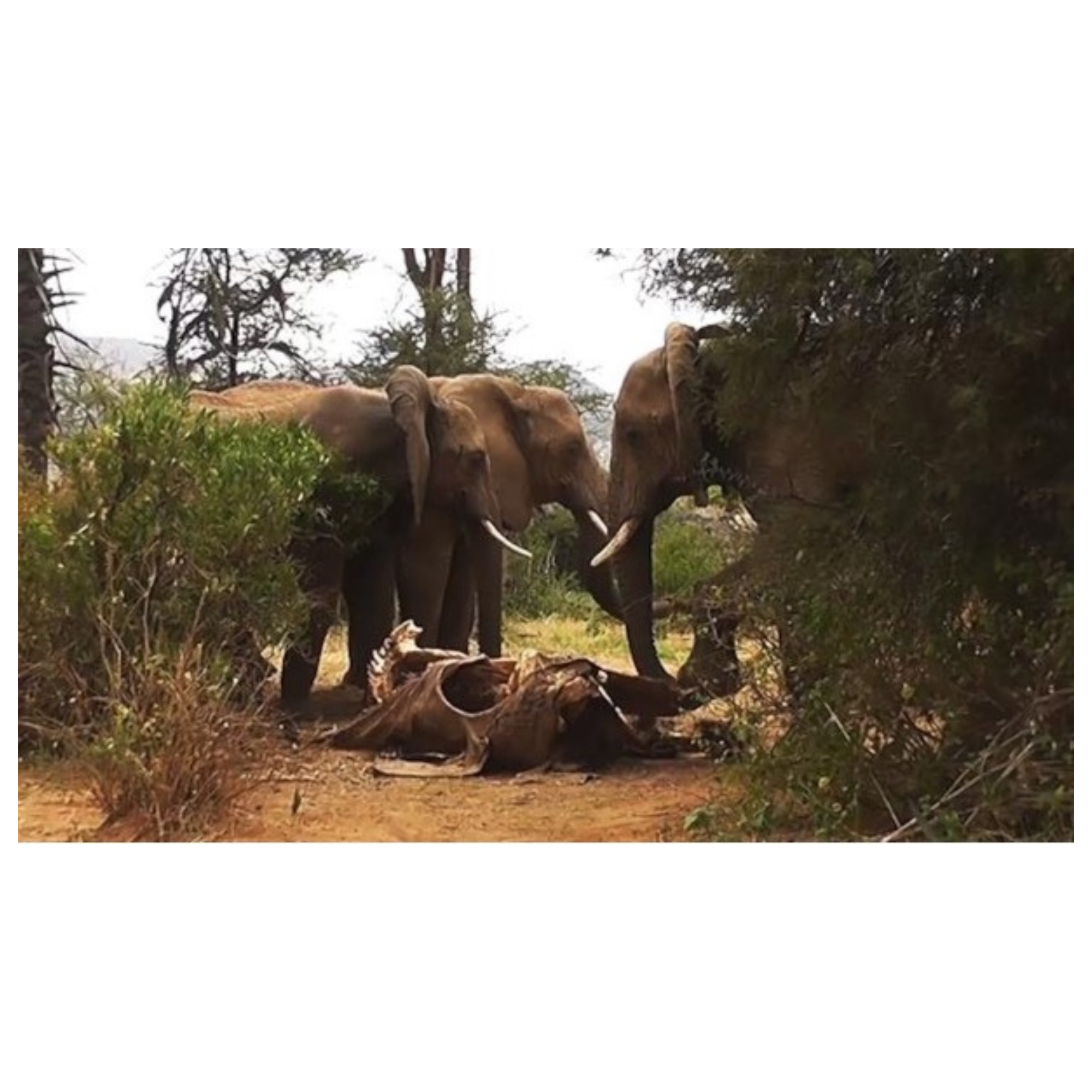
Several highly social and intelligent animals exhibit behaviors resembling funerals or mourning, including elephants, dolphins, chimpanzees, magpies, and crows. These animals may surround the deceased, touch the body, remain silent, or even cover the body with foliage, indicating, in some cases, a capacity for grief and complex emotional awareness.
Echothanatophraxia shows up in Schrödinger’s ideas about
Ritualized confrontation with death
A ritualized confrontation with death, in Schrödinger’s frame, would be any deliberate practice that brings the apparent “end” of the individual into view while holding the insight that plurality is only an appearance. It stages the dissolution of the personal story so that one can recognize what, in his doctrine of identity, does not dissolve: the single, timeless witness that is never born and never dies.
Enactment of shared mortality
An enactment of shared mortality dramatizes the fact that all organisms undergo bodily finitude, yet the underlying subject is one and the same. When a group acknowledges that “we all die,” it is, on Schrödinger’s view, really the one consciousness recognizing that every local form through which it speaks is perishable, even though the experiencing subject is not. Such enactments turn death from a private catastrophe into a common fate inscribed in a single field of being.
Communal expression of unified being
A communal expression of unified being is any shared gesture, rite, or practice through which many bodies affirm that they are, in truth, one self. Within Schrödinger’s doctrine of identity, this is not metaphorical: the “community” is the one mind appearing as many, briefly recognizing itself across its own faces. In this light, communal ritual around death becomes the one subject publicly confessing its own unity beneath the rise and fall of individual lives
4 Affective Mirroring (Stimulus-Bound Emotional Echo)
Affective mirroring is the automatic reproduction of another person’s emotional expression. An observed emotional display evokes a matching emotional state in the observer. This phenomenon arises from coupling between limbic salience networks, interoceptive awareness systems, and autonomic regulation circuits, with limited top-down modulation.
Resident orcas stay with their mothers their entire lives. Mothers and calves even synchronize their sleep patterns; during the calf's first month of life, neither the mother nor the calf sleeps, maintaining a constant 24/7 emotional and physical connection.

Affective Mirroring shows up in Schrödinger’s ideas about
Unity of experience beneath bodily plurality
“Unity of experience beneath bodily plurality” names the claim that, although there are countless organisms and nervous systems, the basic subject of experience is single. On this view, what is fundamentally “having” experiences is not each body as a separate metaphysical owner, but one underlying consciousness showing up through many bodily configurations. The diversity of bodies marks functional and perspectival differences, not a fragmentation of the experiencing principle itself.
Shared interiority
“Shared interiority” highlights that the inner dimension—being a subject, having a first-person “inside”—is structurally the same wherever it appears. My basic sense of “I am aware” is not ontologically different in kind from yours; it is the same type of interiority, differing only in content, history, and perspective. This suggests a common depth-layer of subjectivity, as if each organism opens onto the same interior space rather than possessing a private, sealed-off inner world.
Empathy against strict separation
“Empathy as evidence against strict metaphysical separation” points to how directly feeling-with others undermines the idea that each self is a completely isolated island. In empathy, another’s joy or pain is not just inferred but in some sense participated in, as if the boundary between “my” affect and “your” affect becomes porous. That lived permeability of feeling fits much more naturally with a picture of one subjectivity expressing itself in many centers than with a model of absolutely disconnected, self-enclosed minds.
5 Palilalia (Self-Echo Speech Repetition)
Palilalia is the compulsive repetition of one’s own spoken words or phrases. Instead of repeating external input, the system recycles its own output. Speech production circuits re-trigger themselves in a loop, often with decreasing volume or increasing speed. This reflects dysregulated motor–basal ganglia feedback loops and diminished frontal inhibitory control.
I was unable to verify documentation of these behaviors in wild animals. It appears to be a fully human phenomena.
Palilalia shows up in Schrödinger’s ideas about
Self-reference within consciousness
“Self-reference within consciousness” points to the fact that experience can include itself in its own field: awareness can notice awareness. In Schrödinger’s kind of view, this isn’t one thing looking at another thing from outside, but consciousness turning its own light upon itself while still remaining a single field. The “I” that reflects and the “I” reflected are not two ultimately different entities, just two roles within one act of subjectivity.
Reflexive nature of awareness
“The reflexive nature of awareness” emphasizes that consciousness is not only open to objects but also given, tacitly, to itself in every act. Whenever something appears, there is also an implicit “for-whom” structure—awareness is, as it were, co-present to itself in the very act of appearing. This built-in self-presence allows the subject to be both witnessing and, at the same time, aware of itself as witnessing, without splitting into genuinely separate selves.
Self encountering itself as object
“The self encountering itself as object” names the familiar situation where “I” become something I can look at: my body, my thoughts, my character, even “my consciousness.” In Schrödinger’s style of thinking, this is the one subject presenting an aspect of itself to itself, as though staging itself on the screen it is also watching. The apparent duality—observer here, observed self there—is thus a structural duplication inside one and the same experiencing reality, not a proof of two fundamentally distinct beings.
6 Perceptual Persistence (Sensory Echo Phenomenon)
Perceptual persistence is the continued internal experience of a stimulus after the external input has ceased. The percept lingers, sustained by reverberatory activity within sensory cortices and thalamocortical circuits. The phenomenon reflects insufficient sensory gating and prolonged cortical activation beyond stimulus termination.
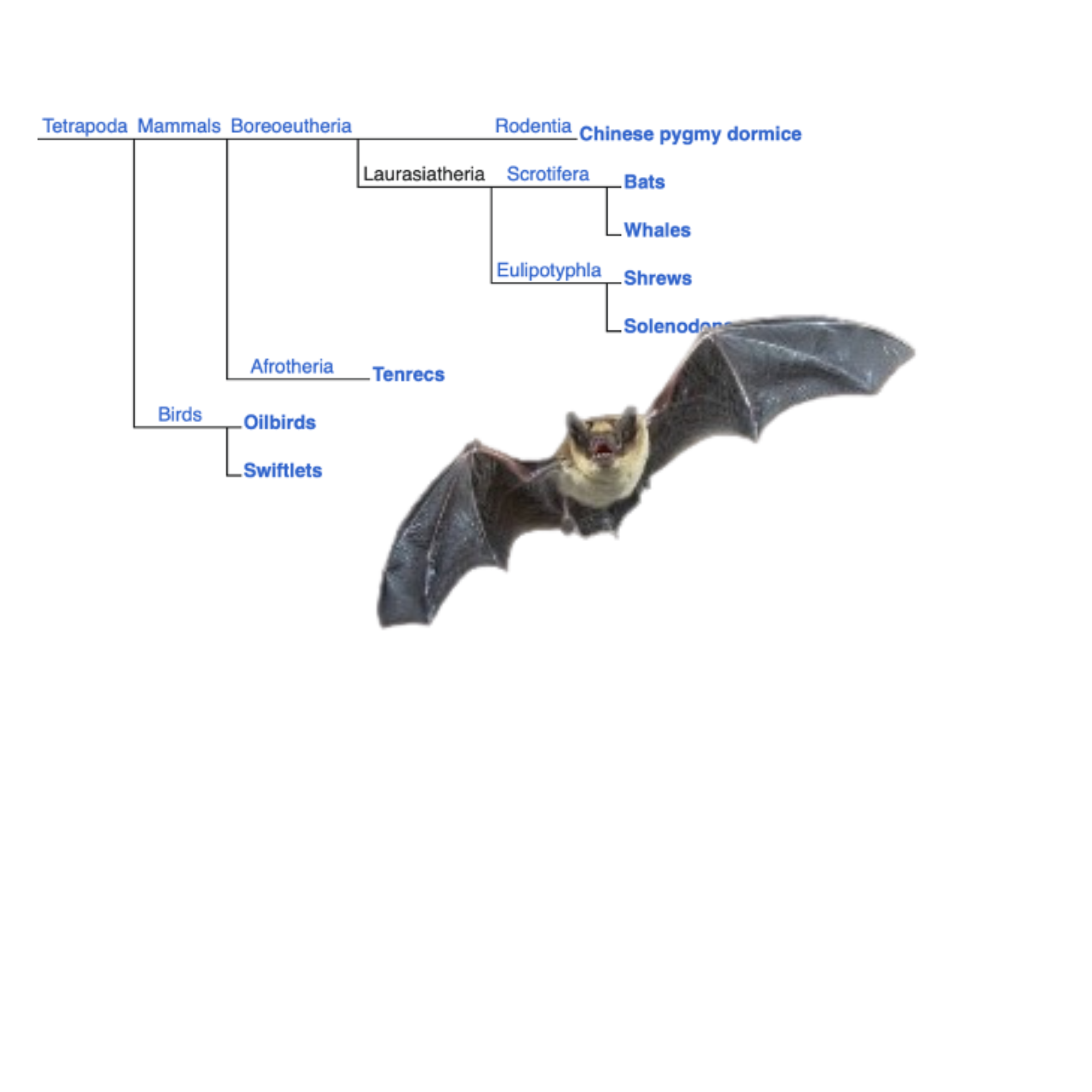
Convergent evolution is the independent evolution of similar features in species of different lineages. Convergent evolution creates analogous structures that have similar form or function but were not present in the last common ancestor of those groups.
Perceptual Persistence shows up in Schrödinger’s ideas about
Continuity of consciousness
“Continuity of consciousness” points to the way awareness is lived as a single ongoing field that stretches across changing experiences. You can track a line from “I who woke up this morning” to “I who am reading this now” as one and the same subject, even though the contents in that field have been in constant flux. This continuity is what lets a life feel like a story rather than a pile of unrelated snapshots.
Persistence of the observing subject
“The persistence of the observing subject” focuses on that “same I” that seems to stand behind different moments, roles, and moods. The one who remembers a childhood scene is felt to be the very one who is recalling it now, despite all the changes in body and personality. This persisting witness is what allows you to say “these are my memories, mythoughts,” linking many episodes to a single center of observation.
Awareness not reducible to momentary stimuli
“Awareness not reducible to momentary stimuli” stresses that consciousness is not just a series of disconnected reactions to whatever strikes the senses. There is a background field that can hold silence, expectation, imagination, and memory just as much as immediate input. In that sense, awareness is the stable “space” in which stimuli arise and fade, rather than something assembled out of those brief events themselves.
7 Cognitive Perseveration (Recursive Thought Fixation)
Cognitive perseveration is the involuntary repetition of a thought, idea, or cognitive pattern beyond its relevance. An initial trigger leads to a self-sustaining internal loop of mental content. It reflects dysregulation within prefrontal–basal ganglia circuits responsible for cognitive flexibility and task shifting, allowing recursive activation to dominate.
This phenomenon has been only been observed in animals in clinical settings.
Cognitive Perseveration shows up in Schrödinger’s ideas about
Continuity of consciousness
“Continuity of consciousness” points to the way experience has an ongoing, flowing character: the field of awareness persists while contents come and go. On this view, the stream may fluctuate, dim, or break in memory, but there is a structural sense in which the same experiencing presence runs through successive moments. That felt through-line is the hint that consciousness is not just a mosaic of isolated instants.
Persistence of the observing subject
“The persistence of the observing subject” highlights that the “I” who remembers having seen earlier events is lived as the very same “I” who sees now. The subject is not rebuilt from scratch with each perception; it is carried across them, appropriating new contents as “mine” over time. This persisting witness gives coherence to a life-story, even as the body, brain states, and experiences continually change.
Awareness beyond momentary stimuli
“Awareness not reducible to momentary stimuli” stresses that consciousness is not just a passive reaction to whatever happens to impinge on the senses. There is an underlying field in which stimuli appear, are related, anticipated, interpreted, and remembered; that field is not exhausted by any particular input. In this sense, awareness is the stable background that receives and organizes transient stimuli, rather than a mere sum of those transient events.
8 Echothanatologia (Thematic Death-Fixation Repetition)
Echothanatologia is persistent fixation on death-related themes, with repeated internal rumination and external expression centered on the same motif. Exposure to the theme initiates a salience-amplified cognitive loop that becomes self-reinforcing. Limbic networks heighten thematic significance while executive control mechanisms fail to redirect attention.
Non-human Primates: Chimpanzees and gorillas have been observed grooming, cleaning the mouths, and staying near the bodies of deceased group members. Mother chimpanzees sometimes carry their dead infants for weeks.

Chimpanzee Carrying her Offspring
Echothanatologia shows up in Schrödinger’s ideas about
→ death as transformation, not annihilation
→ the persistence of consciousness beyond individual biography
→ the illusion of absolute personal extinction
On a Schrödinger-style “one mind” reading, these three spell out how death changes the form of appearance without touching the underlying subject of awareness.
Death as transformation, not annihilation
“Death as transformation, not annihilation” means that what ends at death is the specific configuration—this body, this nervous system, this narrative—not the basic fact of experiencing. The living organism is one temporary way the single consciousness localizes itself; when that form dissolves, the field that animated it is not thereby destroyed. Death is thus a shift in how the one mind appears, rather than the absolute ending of a substantial, separate self.
Persistence of consciousness beyond biography
“The persistence of consciousness beyond individual biography” says that the continuity that really matters is not the survival of a particular storyline (“my” name, memories, roles) but the ongoing presence of the witnessing subject. Biographies are episodic: they begin, develop, and conclude, but the fundamental “for-which” of experience is not, in this view, bounded by those episodes. What persists is the same capacity-to-experience that was never truly “owned” by the biography in the first place.
Illusion of absolute personal extinction
“The illusion of absolute personal extinction” targets the fear that “when I die, there will be nothing at all, anywhere.” On a one-mind picture, this is a category error: it treats the local persona as if it were the ultimate subject, then imagines that subject utterly erased. What actually “dies” is a mask of the one self, so the imagined blankness “after me” is just the mind failing to recognize that the same awareness that looks out through this face will continue to look out through others.
Trauma as Echo
Schrödinger described living matter as structured order persisting against decay — an “aperiodic crystal” that carries pattern forward without rigid repetition. DNA is not a fixed destiny. It is a stable architecture through which variation is expressed.
Generational trauma considered structurally rather than diagnostically looks like this. If an organism lives under prolonged stress, its regulatory systems recalibrate. Hormonal rhythms shift. Stress thresholds adjust. Patterns of attachment and perception subtly reorganize. These changes influence developmental signaling, and developmental signaling influences gene expression. Over time, what began as adaptation to environment becomes part of the baseline from which the next generation develops.
No single event is transmitted. No discrete packet of trauma crosses the generational boundary.
Instead, persists is the Weave
This is where the metaphor of infinitesimal calculus becomes ontological rather than numerical. Calculus concerns itself with how tiny changes accumulate into visible structure. Not one large rupture, but countless small adjustments shaping trajectory. A slight tilt in baseline regulation, sustained over time, becomes a directional bias. That bias becomes the starting slope for the next generation.
Inheritance is not a straight line; it is a weave.
Imagine lineage as longitudinal threads running through time. Environment intersects them as transverse threads. Each life is formed at the crossings. Where threads intersect, tension distributes. When one strand is pulled — through famine, war, displacement, chronic fear — that tension does not remain isolated. It propagates through adjacent strands. The structure compensates, redistributes, stabilizes.
The veil does not tear. It finds new form.
Generations later, the weave appears intact. Yet the internal tension map has shifted. The fabric stretches differently under new stress. It may resist certain forces better. It may yield more quickly in others. The original pull is no longer visible, but its redistribution persists.
In this sense, inherited trauma is not stored as narrative. It is stored as altered resonance. The organism is a configuration of infinitesimal adjustments.
To contemplate this as Schrödinger would is to see life not as the transfer of discrete events but as the persistence of ordered pattern under changing conditions. The genome provides structural continuity. Experience modulates how that structure is expressed. Expression reshapes baseline conditions. Baseline conditions influence the next expression.
Imagine a family lineage as a loom operating continuously. One generation tightens the warp threads because survival demands vigilance. The next generation grows within that tightened configuration. Their nervous systems develop under heightened tension. Even if the external danger fades, the internal tuning remains slightly elevated. The loom does not reset to neutral; it weaves from its current configuration.
Over many generations, slight retuning accumulates. The cloth that emerges carries no written story of its past, yet its texture encodes the history of tension and adaptation that shaped it.