Sleep Archetypes and the 5 Phases of Chinese Medicine
Introduction
New sleep research has revealed that sleep is far from a simple physiological state; rather, it is a multi-dimensional phenomenon tightly woven into our emotional, cognitive, and social lives. Advances in neuroscience and large population studies now allow us to identify distinct sleep archetypes, each reflecting unique patterns of sleep quality, mental health, cognition, lifestyle, and underlying neural signatures.
Drawing on data from hundreds of healthy young adults, this text explores how sleep variability is expressed in five key archetypal profiles. Each profile integrates subjective experience with cognitive and emotional traits and is anchored in measurable changes across major brain networks. Importantly, these emerging scientific frameworks intersect with traditional models—such as the Five Phases (Wu Xing) archetypes of Chinese medicine—offering metaphoric bridges between ancient wisdom and modern biology.
By mapping these sleep archetypes alongside classical and contemporary perspectives, we gain new insight into the complex interplay between body, mind, and environment. The pages that follow synthesize research findings and metaphorical connections, inviting readers to reflect on how individual sleep patterns shape—and are shaped by—deeper forces within the human experience.
Study Design and Participants
The research analyzed data from 770 healthy young adults, ages 22–36, taken from the Human Connectome Project (HCP) S1200 release—a public dataset notable for large sample size and robust sleep, health, and cognitive assessments. Participants completed detailed questionnaires on sleep (Pittsburgh Sleep Quality Index, or PSQI, capturing seven sub-dimensions), mental and physical health, personality traits, lifestyle, substance use, and cognition. Additional measures included multimodal MRI scans for resting-state functional connectivity (RSFC).
Methodology and Analysis
To capture the complex interplay of sleep features and biopsychosocial factors, the team employed canonical correlation analysis (CCA). This method allowed them to find latent components—patterns optimally correlating multifactorial sleep profiles (such as sleep duration, satisfaction, disturbance, and medication use) with suites of biopsychosocial measures covering mood, cognition, physical health, and more. The approach is considered rigorous and well-suited to large, multidimensional datasets.
Each sleep–biopsychosocial profile was then mapped onto distinct neural signatures using RSFC measures from MRI scans. This enabled researchers to examine how sleep-related profiles relate to functional architecture in the brain—providing evidence for specific vulnerability or resilience patterns at the neural level.
Key Findings and Implications
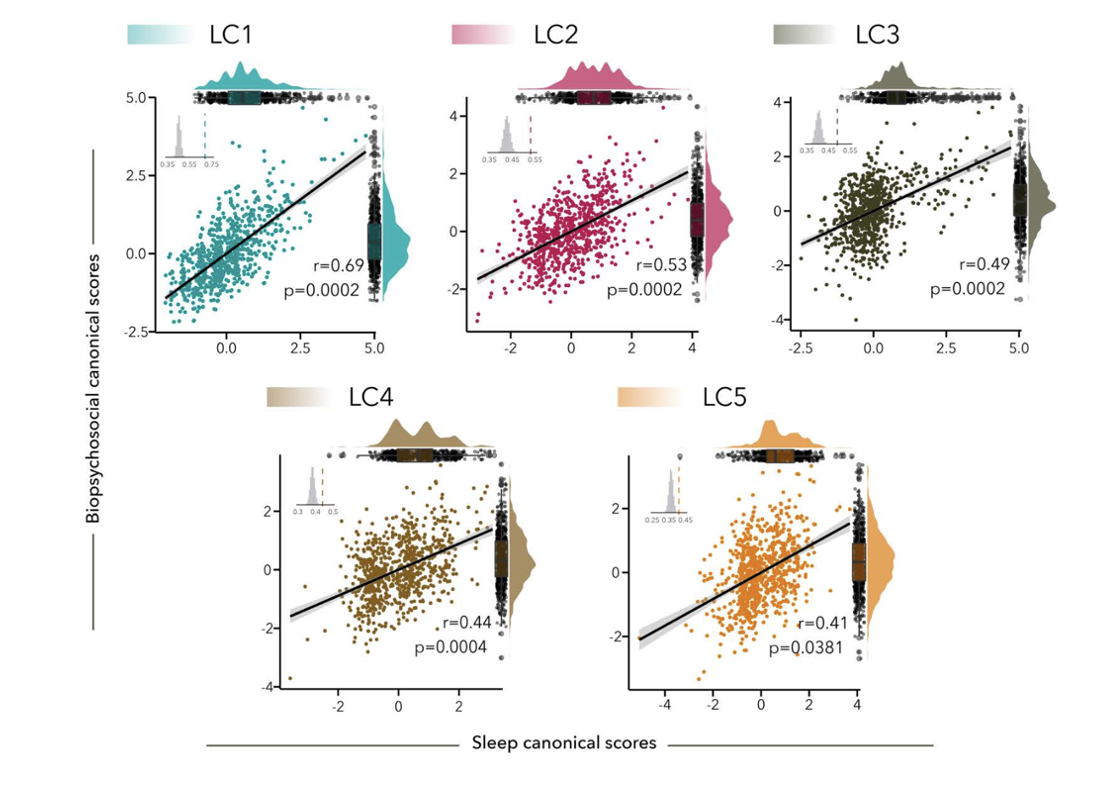
The five sleep profiles explained different amounts of covariance between sleep and biopsychosocial data—with the largest share linked to poor sleep and psychopathology. These profiles delineate multidimensional relationships: some are driven mainly by general sleep quality, others by medication use, sleep duration, or disturbances tied to cognitive and emotional functioning.
Crucially, the study found:
Mental health factors (especially general psychopathology) are deeply intertwined with patterns of sleep variability.
Sleep duration and sleep disturbance show separate links to cognitive performance and mental health, implying that sleep health is not a simple "good" vs "bad" binary.
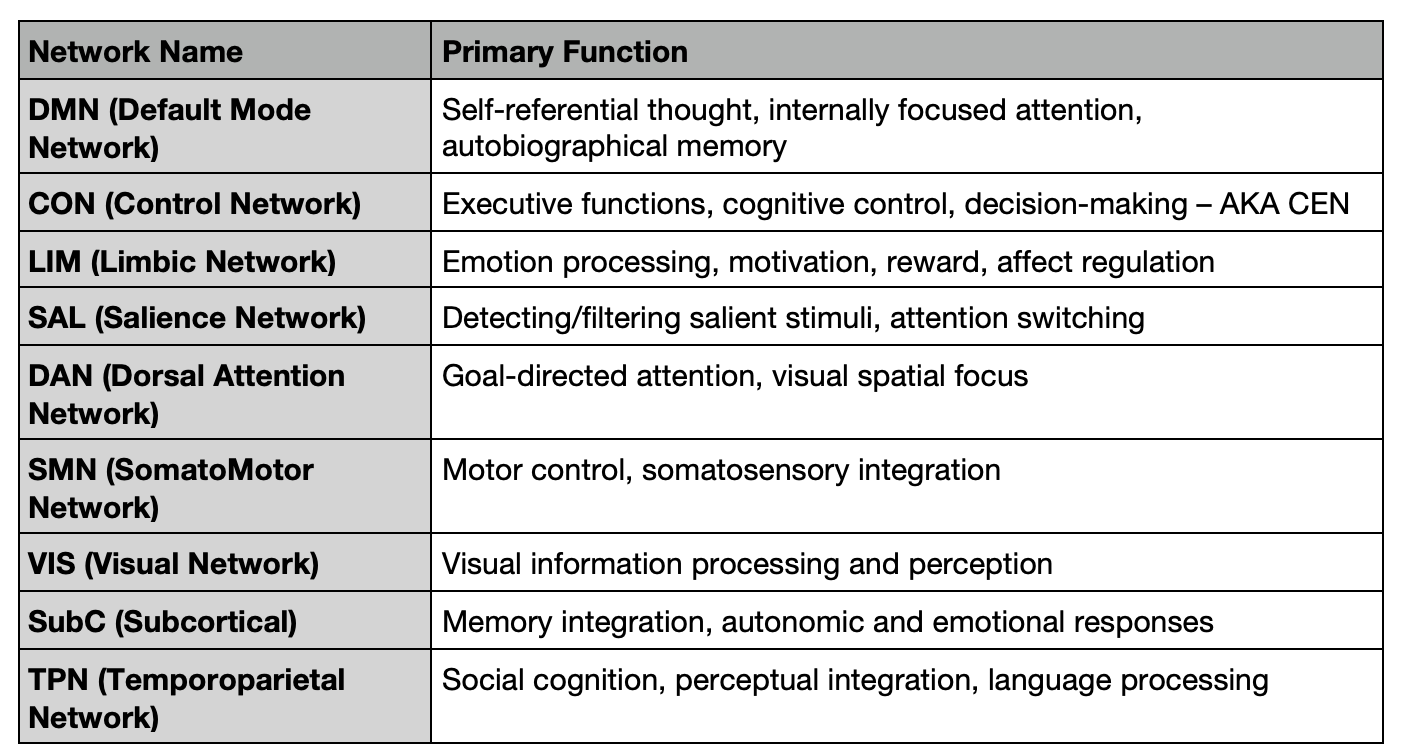
The various profiles have distinct brain connectivity signatures—especially within the somatomotor, attention, visual, and limbic networks, suggesting that vulnerability or resilience to sleep–related issues may be biologically grounded.
Socio-demographic factors, such as education, income, race, and sex, influenced composite scores, with sex differences most apparent in the sleep disturbance/psychopathology profile (LC5).
Study Limitations and Novel Contributions: 5 Archetypes
Most measures were self-reported, which introduces subjective bias but reflects real-world clinical presentations. The multivariate technique does not establish causality, and the study’s young, healthy sample limits generalization to older or clinical populations. Still, the integration of subjective sleep profiles with cognitive, behavioral, lifestyle, and neural imaging data represents a major advance in sleep research.
Overall, the study recommends adopting multidimensional frameworks in both scientific research and clinical settings to better account for individual sleep variability and its multifaceted impacts on health and well-being.
The researchers identified five distinct sleep types, or “sleep–biopsychosocial profiles,” each representing a different combination of sleep characteristics, mental health traits, cognitive patterns, and neural connectivity signatures. These were derived from 770 healthy young adults in the Human Connectome Project using data-driven canonical correlation analysis.
1. Poor Sleep with Psychopathology (LC1)
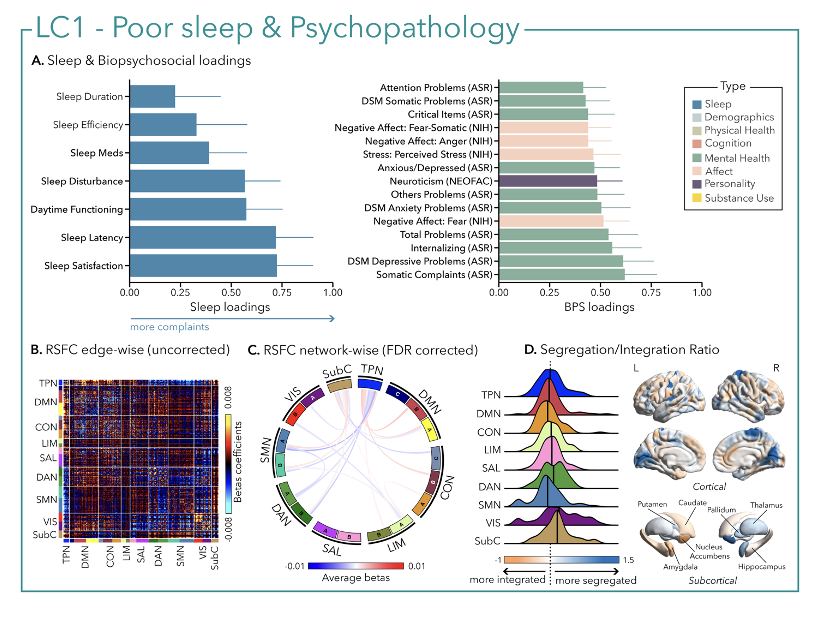
This type reflects general poor sleep — low satisfaction, long sleep latency, frequent disturbances, and daytime fatigue — strongly linked to depression, anxiety, negative affect, and somatic complaints. Individuals in this category exhibited altered subcortical–cortical brain connectivity, including increased coupling between somatomotor and dorsal attention (efferent) networks, consistent with sleep-related hyperarousal.
2. Sleep Resilience (LC2)
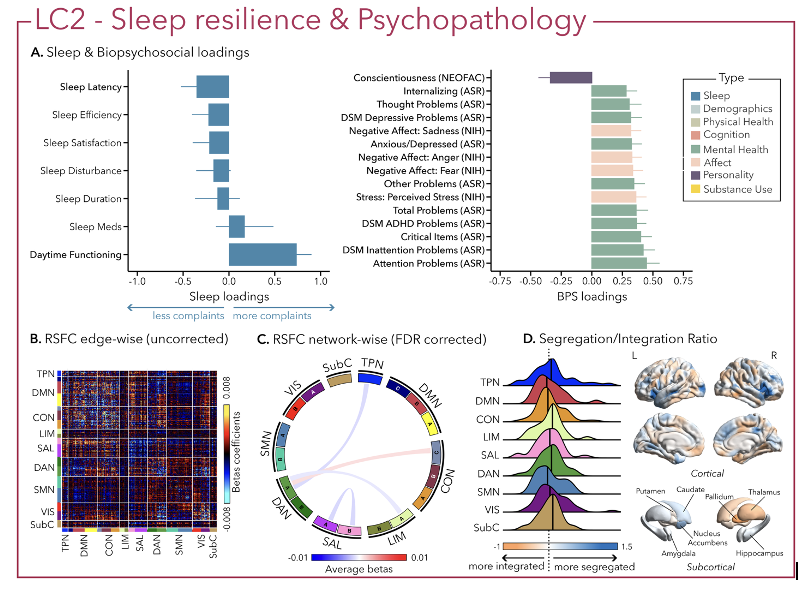
Although also associated with psychopathology (symptoms such as inattention or ADHD traits), individuals in this group did not report poor sleep quality, suggesting relative resilience or reduced perception of sleep deficits. Neural patterns showed preserved thalamo-cortical coupling and distinct connectivity balancing attention and control networks, indicating potential biological protection against sleep disruption.
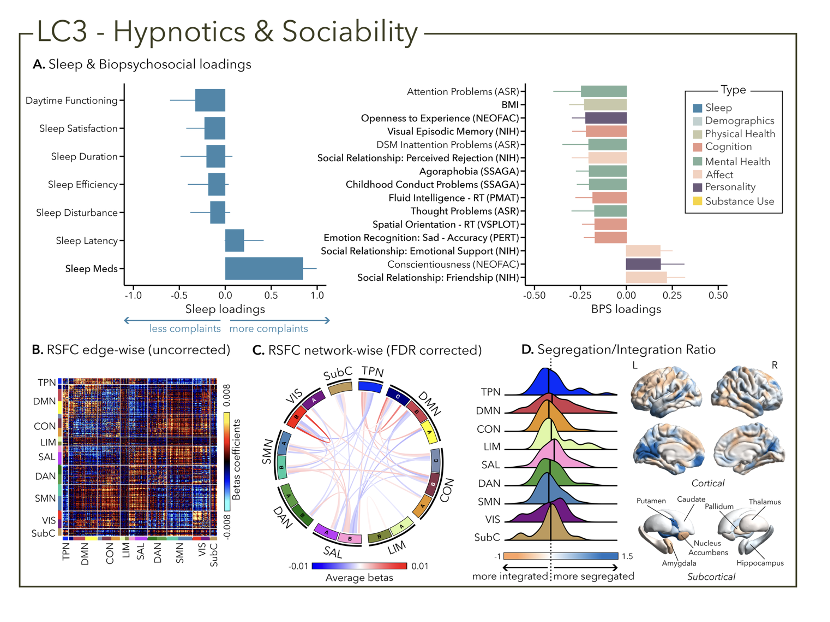
3. Sleep Aid Use and Sociability (LC3)
This profile was defined by frequent use of sleep medications but relatively few daytime complaints. It correlated with high social satisfaction, lower body mass index, and poorer visual memory and emotion recognition performance. Brain imaging showed greater segregation in default mode and visual networks, possibly reflecting the sedative effects of hypnotic substances on perceptual and affective processing.
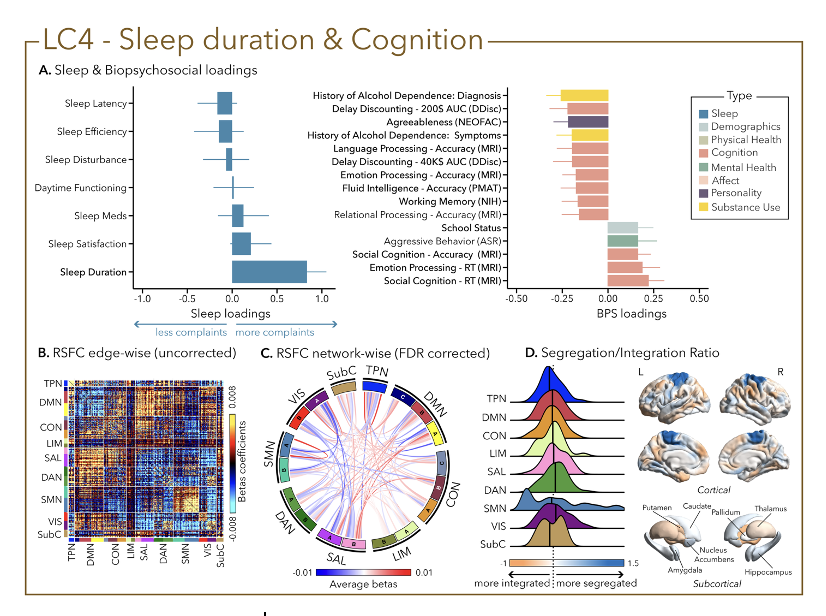
4. Short Sleep and Cognitive Impact (LC4)
The hallmark of this type was short sleep duration (≤ 6–7 hours per night) without strong psychopathology links. It was associated with worse cognitive performance — notably slower reaction times and reduced accuracy in emotional, language, and working memory tasks — as well as higher aggression and reduced agreeableness. Resting-state fMRI revealed widespread changes in connectivity, implying homeostatic compensation for sleep debt.
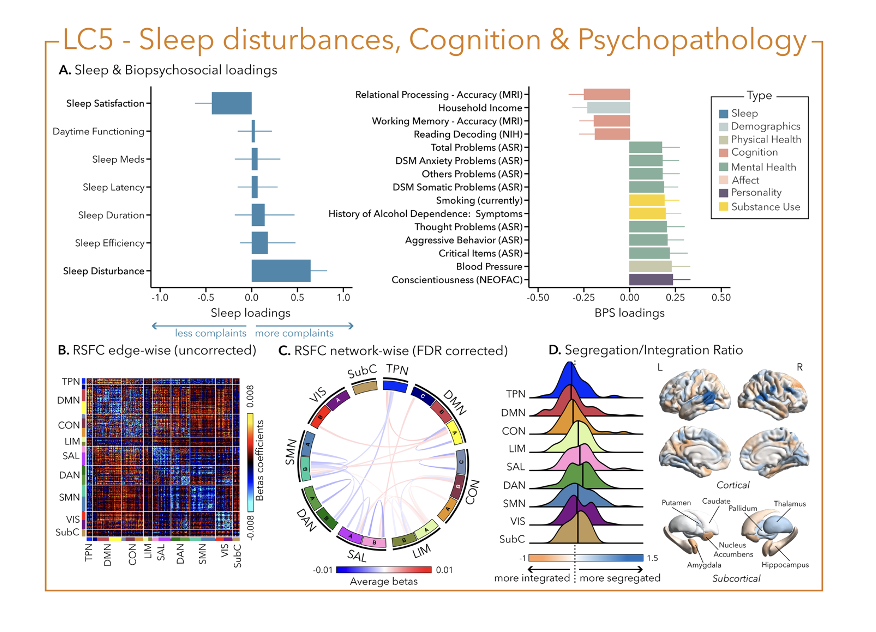
5. Sleep Disturbance and Psychopathology (LC5)
This profile captured sleep fragmentation (awakening, breathing issues, pain, or temperature dysregulation) and was linked to anxiety, thought problems, substance use, and impaired cognition, particularly in language and working memory tasks. LC5 showed distinct reductions in somatomotor and attention network connectivity and exhibited notable sex differences, with women scoring higher on both sleep disturbance and mental health complaints.
Together, these five archetypes demonstrate that sleep variability interlaces deeply with mental health, cognition, and social factors, forming identifiable neurobiological patterns rather than a simple binary of good versus poor sleep
In their imaging, the Researchers Measured activity in the following locations:
The Neuroaffective Lens
While neuroscience offers a layered map of how sensations, feelings, and relationships shape sleep and consciousness, Chinese cosmology distills these complexities into the Five Phase star—each element an archetype of transformation, rooted in body, mind, and world. Together, these diagrams reveal not just different perspectives, but a shared language: color, phase, and pattern are the keys to understanding how experience is woven at every scale.
The Five Phase diagram on the right arranges the elemental archetypes (fire, earth, metal, water, wood) in a classical star pattern, highlighting their mutual interaction and transformation. This serves as a bridge between ancient symbolic medicine and contemporary holistic frameworks.
In this synthesis, dreaming is connected with Shen—the seat of sentience, spirit, and creativity—showing how sleep, consciousness, and archetypal forces interweave in the tapestry of human experience
Aligning the 5 Archetypes of Sleep to Isaac Newton’s Original Measure of the Light Spectrum (which was 5), we can compare the findings as they relate to senses, organs, and more
Poor Sleep with Psychopathology (LC1) – Metal (Po)
This profile involves somatic complaints, anxiety, and depressive symptoms, aligning metaphorically with Po (corporeal soul) in TCM, associated with grief/courage and the Metal phase. The physical sensitivity, emotional lability, and disrupted boundaries in sleep and affect mirror Po's connection to the Lungs and Large Intestine, responsible for managing transitions and release.
Sleep Resilience (LC2) – Earth (Yi)
Here, individuals retain cognitive and emotional balance despite some risk factors. This reflects Yi (intent/worry/persistence), the Earth phase (Spleen/Stomach), which manages stability, trust, and the ability to integrate experience. The "resilience" archetype, or capacity to buffer disturbances, resonates with Earth’s harmonizing and assimilative character.
Sleep Aid Use and Sociability (LC3) – Fire (Shen)
Frequent sleep aid use with high social functioning suggests analogies with Shen (spirit/consciousness), the Fire phase (Heart/Small Intestine). Fire governs relational warmth, social connection, and emotional response—here, sociability is preserved, but artificial sedation echoes Fire’s double-edged nature (excess vs. deficiency).
Short Sleep and Cognitive Impact (LC4) – Wood (Hun)
Short sleep duration with cognitive and behavioral volatility aligns with Hun (ethereal soul/vision)in the Wood phase (Liver/Gallbladder). Wood rules movement, planning, and adaptability. When sleep is insufficient, vision and flexibility (the realm of Hun) get disrupted, resulting in agitation and impaired adaptability.
Sleep Disturbance and Psychopathology (LC5) – Water (Zhi)
This type, with fragmentation, anxiety, and impaired memory, metaphorically fits Zhi (will) in theWater phase (Kidney/Bladder). Water governs willpower and calm in the face of threat; when disturbed, there’s a loss of cohesion and resilience, leading to fragmentation, fear, and memory loss.
Perrault, A.A., Kebets, V., Kuek, N.M.Y., Cross, N.E., Tesfaye, R., Pomares, F.B., et al. (2025). Identification of five sleep-biopsychosocial profiles with specific neural signatures linking sleep variability with health, cognition, and lifestyle factors. PLOS Biology, 23(10): e3003399. https://doi.org/10.1371/journal.pbio.3003399